Showing posts with label boost sales. Show all posts

Wednesday, 27 January 2016

13 Ways to Increase Your Conversion Rate Right Now


Increasing your conversion rates is absolutely crucial. Having a good conversion rate is the foundation of high sales volume.
Let’s say your goal is to increase your sales by 50%. How would you do it? More advertising? Producing 50% more content? 50% more time, effort and money into marketing?
All of this could work, but it sure is much faster and cheaper to do it by increasing your conversion rate. Remember – if you have 2% conversion, going to 3% is actually a 50% uplift in results!
Sometimes just a small tweak can lead to significant improvement in conversion rates. Many small and a few big tweaks combined can bring dramatic increase in your results.

1. Do A/B testing

In real estate it’s about location, location, location. In conversion optimization it’s testing, testing, testing.
Wait! What’s A/B testing in the first place?
A/B testing (or split testing) is a technique for increasing your website’s conversion rate (that’s its ability to turn visitors into customers). If you had two possible headlines for your page and you couldn’t decide which to use, you could run an A/B split test which one works better.
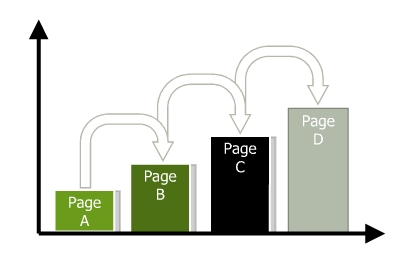
You create two alternative versions of your page (page A and page B), each with a different headline. A/B testing software directs 50% of the incoming traffic to page A and 50% to page B. Both pages have a call to action, and in the end you count how many people took the action.
The page with more conversions (more people taking action) wins.
Your goal should be to have at least one, and preferably several A/B tests running at any given time on your site. There’s no “perfect” when it comes to marketing sites, and the only way you learn about what works and doesn’t work is to continuously test.
Deciding what to test
Marketers guess what factors to concentrate on and mess around testing things that have little or no impact on users or conversion goals. Instead, use the data available to you to spot the most important projects to focus on.
To help you decide what tests you want to do, consider the potential revenue each test may bring, and rank tests accordingly. It’s important to test one hypothesis at a time – otherwise you won’t know which change made the difference.
Main things to test:
  • The headline. You should have a strong, convincing and believable headline that promotes the main offer. The legendary ad guru David Ogilvy once said: “On the average, five times as many people read the headline as read the body copy.  It follows that, if you don’t sell the product in your headline, you have wasted 80% of your money.
  • Page layout and navigation.
  • The offer. What is it that the customer is getting for their money (how is it all described and laid out).
  • The size of your order buttons and the wording of call to action (e.g. “Join now and get access to XYZ” vs “Sign up”). For software products the primary call-to-action should often be the “demo/trial”, not the “checkout/purchase” buttons. Enlarging your action buttons usually helps.
  • Different media: test adding a video to communicate key points.
  • Radical change. Sometimes you want to compare two totally different approaches.
What to use for testing
Many entrepreneurs spend money buying expensive testing software before they actually understand how to implement a conversion rate optimization process. You don’t need to spend much.
  • Google Content Experiments – built into Google Analytics. Free. The downside is that it’s not real-time, and you always need to create 2 separate URLs for testing.
  • Optimizely says it’s an A/B testing software you’ll actually use, while Visual Website Optimizer says it’s the easiest. They’re price similarly (the latter being a bit cheaper) and not out of reach for small business owners (but not dirt cheap).
There’s no excuse for NOT testing. Testing is easy, fast and actually… fun! You get to test your gut feeling, learn new things all the time and exercise your creativity.
Testing should also never end. As soon as you have a winning page, try to build on that and test something else.
Incremental positive changes lead to substantial growth.
 

2. Create a compelling and clear value proposition

The potential of your conversion rate is determined by the value proposition, making it the most important conversion factor.
What exactly is a value proposition?
It’s the primary reason a prospect should buy from you. Customers not only want to know “What’s in it for me?” but “Why buy from you?”
If you had just 10 words to explain why people should buy from you instead of the competition, what would you say?
Many marketers try to improve results by changing page elements like font colors and sizes, button shapes, images, incentives, and so on, when the first step should really be focusing on strengthening their value propositions.
If your home page or the product page says “Welcome!” or lists just the name of your company or the product, you’re missing out. Note that there is a difference between the value proposition for your company and your product. You must address both.
What makes a good value proposition?
  • It must be differentiated from your competitors’ offers.
  • You may match a competitor on every dimension of value except one. You need to excel in at least one element of value (key important factor for the buyer).
Crafting a value proposition requires substantial reflection on what is unique about your company and your products and services. Having a powerful value proposition is not enough; it must be communicated effectively to achieve optimal results. You need to refine your value proposition until you can articulate it in a single, instantly credible sentence.
However hard you work on expressing your value proposition, to know its true effectiveness you must test to see how it resonates with your ideal prospect. Optimizing value propositions is a continual process that involves identifying, expressing, and testing/measuring. Use A/B testing to do it.

3. Set up a sales funnel

Sometimes what kills your conversions is that you’re asking for the sale (signup, whatever) too fast. People might be “just browsing”, not be psychologically ready or not in a hurry to buy right now.
The more expensive and/or complicated the product, the more time people need before they’re ready to commit. 
As I mentioned earlier, for software products sometimes offering a demo or a free trial instead of asking for a signup or purchase can bring significant improvement in conversions. But in many cases you need to just slow down and build a sales funnel to build trust, develop relationship and prove your expertise.
Let’s say your product is an online course on DIY home repair. Here’s how you should go about it.
What the visitor wants
  • To learn about DIY home repair
What you want
  • Get the visitor to buy your course
How to do it
  • Offer valuable free home repair advice via your blog, videos, free reports, whitepapers
  • Become their trusted advisor
  • Give them compelling reasons to sign up to your email list (in exchange for some good info)
  • Free drip content video course via email
  • Send them to your sales copy and ask for the sale
Some people say it takes at least 7 contacts with a prospective buyer before they’re ready to buy from you. I haven’t seen any recent research to back this up, but I know for a fact that the longer and deeper your relationship with the prospect, the more likely they are to buy from you.
So slow down. Offer value and results in advance, way before asking for the sale. Just capture their email address, so you could continue talking to them.

4. Cut the jargon

Clarity trumps persuasion, always.
Recently I came upon a site with the following value proposition:
“Revenue-focused marketing automation & sales effectiveness solutions unleash collaboration throughout the revenue cycle”
What does it mean? Can you now explain what they do and how is it useful to you? Not really, right?
Do not try to woo people with fancy, complicated business language – it just doesn’t work. 
You write for people, it’s people who read your site. A marketing director or a purchasing manager are people too. Don’t write for companies, write for people.
Clarity is something that I see marketers constantly struggling with. The best way to re-phrase all of the marketing speak on your site is to imagine you’re explaining your product to your close friend. If there’s a sentence worded in a way that you wouldn’t use in a conversation with a friend, re-word it.

5. Address objections

Whenever people read your offer, there will be friction. They’ll have some conscious and sub-conscious objections to what you’re saying and hesitations about taking the offer.
While during in-person sales we can uncover those hesitations with questions and address the concerns, online that’s kind of difficult. The solution is to prevent those objects by addressing all the possible issues in your sales copy right away.
Step one – create a list of all the possible hesitations and objections your potential customers might have. Step two, add info to your sales copy to eliminate or alleviate those concerns. The list can contains things like
  • You don’t understand my problem (explain the problems your product solves)
  • Why should I believe you? (show off your credentials, experience, awards etc)
  • What if it doesn’t work on me? (have testimonials of all kinds of users that have benefited from your product)
  • It’s not worth the money, there are cheaper alternatives out there (explain your price, compare with the competition, prove the value your product offers)
… and so on. It’s important to come up with as long list as you can. Seek external input, do user testing and ask your customers to figure out what all they might be concerned about.

6. Increase trust

Let’s say you walk down the street, and some random dude comes up to you. “Hey, wanna buy an iPad2? Just $50. It’s brand new.” Would you buy it?
You know the product is good. You know it’s a really good deal. But you probably wouldn’t still buy it. Why? Because you don’t trust him.
Sales guru Zig Ziglar once said that there are only 4 reasons why people won’t buy from you:
  • no need,
  • no money,
  • not in a hurry,
  • no trust.
We can’t do much about the first 3 reasons, but we can build trust. Add trust elements to your website and see your conversions increase.
So what makes people trust a website? The good thing is that Stanford Persuasive Technology Lab has studied this over the years and has the answer.
Here’s the list, make sure your website has all of the items present:
  • Make it easy to verify the accuracy of the information on your site. You can build web site credibility by providing third-party support (citations, testimonials, articles in well-known publications, source material) for information you present, especially if you link to this evidence. Even if people don’t follow these links, you’ve shown confidence in your material.
  • Show that there’s a real organization behind your site. The easiest way to do this is by listing a physical address. Other features can also help, such as posting a photo of your offices or listing a membership with the chamber of commerce.
  • Highlight the expertise in your organization and in the content and services you provide. Do you have experts on your team? Are your contributors or service providers authorities? Be sure to give their credentials. Are you affiliated with a respected organization? Make that clear. Conversely, don’t link to outside sites that are not credible. Your site becomes less credible by association.
  • Show that honest and trustworthy people stand behind your site. Find a way to convey their trustworthiness through images or text. Post employee photos and bios that tell about family or hobbies.
  • Make it easy to contact you. A simple way to boost your site’s credibility is by making your contact information clear: phone number, physical address, and email address.
  • Design your site so it looks professional (or is appropriate for your purpose). People quickly evaluate a site by visual design alone. When designing your site, pay attention to layout, typography, images, consistency issues, and more. Amateur-looking websites kill trust, invest in a quality designer.
  • Make your site easy to use — and useful.  Research shows that sites win credibility points by being both easy to use and useful. Some site operators forget about users when they cater to their own company’s ego or try to show the dazzling things they can do with web technology.
  • Update your site’s content often. People assign more credibility to sites that show they have been recently updated or reviewed. If you have a blog or a news section, make sure they’re updated regularly. Nothing says “out of business” like an abandoned blog.
  • Use restraint with any promotional content (e.g., ads, offers). Nobody likes hype, popups and blinking banners. People associate it with scam and spam. If possible, avoid having ads on your site. If you must have ads, clearly distinguish the sponsored content from your own. As for writing style, try to be clear, direct, and sincere.
  • Avoid errors of all types, no matter how small they seem. Spelling errors and broken links hurt a site’s credibility more than most people imagine. It’s also important to keep your site fast, up and running.

7. Make it easy to buy from you

Your goal has to be to make doing business with you as easy as possible. Your users should not try to figure out how to buy from you or where to click. It has to be intuitive and self-evident. As few clicks as possible.
Could your grandma be able to buy from your site within a minute or two?
  • Tell your users what they should do next. In every page, always guide the user towards the action you want them to take. Make the primary next step look more important than other links.
  • Do not give users too many options. The Paradox of Choice (a great book, btw) states that the more choice you will give your users, the easier it is to choose nothing. Choice paralyzes. If you have a lot of products, build better filters, so your prospects could identify the right one for them without spending too much time.
  • Ask to fill as few fields as possible. The more fields you have in your order or sign up form, the less people will fill it. Add the option to sign up via their Facebook or Google account. Don’t ask for anything that you don’t absolutely need to know in order to fulfill the order.
  • Do not force users to sign up in order to buy. Do you know the story of the 300 million dollar button? I suggest you read it. The main point: do NOT force people to sign up as a user in order to buy from you. Let them check out as a guest. It will make a world of difference.
  • Offer free shipping. Free shipping was the most popular motivation for 82% of UK and 80% of US consumers in a study conducted by eConsultancy, and gives etailers that offer this option a clear advantage over competitors.

8. Communicate value

A common mistake entrepreneurs make is that they do not provide enough information about the products and services they sell.
Let’s take that chair, for instance. If I’d describe it like this (all true facts):
  • Seat and back of breathable pellicle suspension material for long-term comfort.
  • Weight: 51 pounds
  • Color: Classic Carbon Pellicle
  • Full 12-Year Manufacturer’s Warranty
Price: $869.
Would you pay $869 based on what I just listed here?
No, that would be ridiculous. Yet so many sites do exactly that (luckily the maker of this chair provides more info than that).  They just list a bunch of bullet points with features along with the price.
The best way to sell products and services is to to add as much information about them as is possible. Pages and pages and pages, videos and images. It’s true that 79% of people won’t read it all, but 16% read everything! That 16% is your main target group.
If one reads all of the product info and is not convinced yet, you have a problem. But if one is convinced after reading just 1/4, they can skip the rest and just complete the purchase right away. Up to 50% of potential sales are lost due to inadequate information, says IDC, a global research company.
You need to provide enough information so that the prospect could convince themselves
Add pictures, videos, reviews to all of your products.  Intelligent, neutral and benefit-oriented sales copy works the best. Take a look at Amazon – they manage to create a lot of content for most products they sell, and they sell millions of products.
Aah, and list the price AFTER you communicate the value. Otherwise people might make a snap judgement based on the price without reading the value it offers.

9. Offer proof

Whatever you claim, you need to back it up with proof. People are skeptical and they want to see the evidence.
So what kind of proof can you provide?
  • Customer testimonials. People who used your products verify your claims. It’s a good idea to use testimonials from customers that were in a worse situation that the average customer. If even people in terrible circumstances could get the results, so can they!
  • Case studies. We’ve all seen before and after type of case studies. Very effective.
  • The results of scientific tests and studies. I know a log home manufacturing company that wrestled with the claims that log homes lose a lot of heat in the winter and they’re expensive to keep up. They commissioned an independent study from a well-known university. The study found that the log homes are as energy efficient as any other kind of buildings. Now the manufacturer can refer to this study to back up their claims.
  • Third-party reviews. Did a trade magazine or a blog write a glowing review? Show it off and link to it.
  • Social proof. If you have thousands of customers, make it a well-known fact. Nobody wants to be the only idiot using your service. If you have thousands of people / companies use your service, can’t be all that bad!
  • Show it! Nothing like a good demo to prove what your product does. Use videos that showcase your product in action.
Go over all the claims you make in your sales page and figure out how to add some proof.

10. Remove distraction

This is big. You want people to focus on a single action and not be distracted from it.
Are there items on the page that could divert the visitor away the from the goal?
The more visual inputs and action options your visitors has to process, the less likely they are to make a conversion decision. Minimizing distractions like unnecessary product options, links and extraneous information will increase the conversion rate.
On your landing pages and product pages, remove or minimize everything that is not relevant to users taking action.
  • Remove or shrink the menu.
  • Get rid of sidebars and big headers.
  • Take off irrelevant (stock) images.
Ask yourself is there anything else that you could take off page, something that is NOT contributing to the conversion?

11. Compare with the competition before they do

Every product and service has its competitors – direct and indirect. Research shows clearly that people do their homework before purchasing a product and compare among providers. It seldom happens that someone will buy your product without checking out your competition first.
Taking that into account, use it – compare your products to competing products before users do.
People are lazy. More often people compare things without giving it a lot of thought – they just look at the price and main features. For example when choosing a web host they look at the server space and monthly payment and that’s it. You, as an expert in your field, know that actually many other things should be considered.
When it’s you doing the comparison, you can point out the things you feel are your biggest advantages over the alternatives. If your product is more expensive than others, then this is your chance to explain why.
What if your competition is already doing it?
Imagine if your competitor is openly comparing your services and making it look like their offer is superior, and you don’t provide any information on why your product is better? A large number of people will take that competing offer.
Another benefit to adding product comparison pages to your website is that it can keep people from leaving your website. They can already do the comparison on your site, so why leave? It won’t keep all of them on your site, but you’ll definitely win over a good portion of visitors.
How to do the comparisons?
This depends on your product. If it’s a pure spec­-based product like say, a laptop, you can compare the specs (battery life, disk space, RAM etc) in a traditional table. If your product is more complex, use a more descriptive comparison.
If some of the specs are lower than the competition’s, point out that maybe your support is way better or you provide personal consulting or its more green or whatever. Also, admitting your shortcomings is a good thing – it makes the rest of your case more believable.
The traditional way is using tables like this, but probably you can come up with better, more creative ways.

12. Reduce or remove risk

Whenever there’s a transaction, there’s risk. Usually the vendor has the buyer carry most of the risk. If the risk seems to big, the purchase won’t take place.
Offer guarantees to eliminate or reduce the perceived risks your prospects might have. Here are some examples of great guarantees:
  • Hyundai and America’s Best Warranty. Hyundai struggled with years with a reputation that it makes crappy cars that break down fast. So they initiated a 10-year warranty – basically saying that ‘how can it be a bad car if we’re giving it such a long warranty?’ . Now Hyundai is considered the new Lexus.
  • The Punctual Plumber. Plumbers are renown for being late. To combat this prejudice, they branded themselves as ‘The Punctual Plumber’ and will pay you for every minute they’re late. If they’re willing to do it, they probably won’t be late, will they? Guarantee removes risk.
  • Pizza delivered in 30 minutes or it’s free. If you’re ordering pizza, the delivery time is a concern. With a guarantee like that, this fear is eliminated.
  • Not only will we give your money back, but also compensate your pain. This is the most powerful kind of guarantee – a pain compensation guarantee.
30-day money-back guarantee is like the industry standard and you should definitely not offer any less. Try to do better than that.
A/B test various guarantees to find out what works best.

13 Add incentives to take action right away

Is there an indication that the action needs to be taken now? The tone of the presentation, offers and deadlines can all influence urgency. I bet you have seen urgency notifications like this before:

It might seem obvious to some and some might think it can’t possibly work, but it does and very, very well. Nothing creates urgency like scarcity.
There’s 2 kinds of of scarcity you can create:
  • quantity-related scarcity (2 seats left at this price)
  • time-related scarcity (last day to buy)
If the supply of your product is endless, you can give out time-sensitive bonuses, a free gift to first X amount of buyers or a discount if they complete the purchase within a certain time frame.
Word of advice: the reason for scarcity has to be authentic. Do not lie to your customers, ever. If it’s fake scarcity, people will know, and your trustworthiness plummets. It’s not worth it.
Thank you for reading. Until next time.
 

Friday, 11 December 2015

6 YouTube Tips to Improve Your Search Rank


Are your YouTube views falling?
Do you need to rank higher in YouTube search results?
Understanding how you can take advantage of YouTube’s algorithm will help your channel and videos be seen by more people.
In this article you’ll discover how to make your video rank higher in YouTube search results.
 
6 youtube tips to improve search rank
Discover six tips to improve your YouTube search rank.

#1: Align Content Development With Viewer Searches

To get a leg up on your YouTube competition (which may be targeting irrelevant topics or subjects), find the exact words and phrases people use to search for content like yours on YouTube.
You can use both free tools (like Keyword Tool and YouTube Trends) and paid tools (VideoCents and vidIQ, for example), to get insights into what people are searching for on YouTube.
The paid tools give a bit more data, but their true value comes from providing a sense of how hard it is to rank for specific terms. Here’s an example of some inline keyword insights on the word ‘vine’ from VidIQ.
 
vidiq keyword report
Use tools like vidIQ to get keyword insights.
 
You’re looking to find the sweet spot, where a keyword is getting a good number of searches but isnt overly competitive. What constitutes a good number of searches will vary by industry or market.
After you’ve identified the best keywords, you can use them when creating and publishing your content.
Create Videos People Search For
Hank Green’s SciShow searched for the most asked questions about science and created an entire series of videos to answer them. This tactic earned the channel millions of views across the series.
 
scishow youtube video
Target the keywords people are searching for on YouTube.
 
Optimize Your Video for How Viewers Search
For all its power, YouTube still finds it difficult to read video content, so you need to tell the platform exactly what your video is about. You do this through the videos meta data.
If you use your keywords strategically (without spamming), you’ll be much more likely to rank for your chosen keywords, as YouTube knows that your video is related to these terms. Include your keywords in the video title (as close to the start as possible), the description, tags and transcript file (the script should contain targeted keywords).
Check out this example, which ranks #2 for the search term “video marketing.” The keyword is visible in the title and description.
 
sold with video youtube keywords in title and description
Include keywords in your title and description.
 
You’ll also find the keyword in the tags.
sold with video youtube keywords in tags
Use keywords as tags.
 
It’s even included in the subtitles.
sold with video youtube keywords in subtitles
Add keywords to subtitles.
With strategic keyword optimization like this, it’s no surprise that this video ranks so high for such a competitive keyword.

#2: Maximize Video Watch Time

Watch time is YouTube’s most important ranking factor. It’s a simple fact: If you don’t have strong watch times, your videos will be demoted in search. Remember that its all about what percentage of the video is watched, not just total minutes (though it’s best to increase both).
Michael Stevens of Vsauce is successful at getting his YouTube audience to stick around. Even though his videos are over 10 minutes long, they routinely log hundreds of thousands of views.


He gets straight to the point in answering the title question, and uses his personality and intelligence to pique people’s curiosity again, steering the conversation to a different but related topic. Take a cue from Michael and consider removing long intros and outros.
Get people to watch more of your video, and YouTube knows that you’re providing value to those viewers. YouTube will reward you by suggesting the video to more people and ranking the video higher in search.

#3: Drive Longer Channel Sessions

This may seem like a no-brainer, but try to get people to watch more than just one of your videos. All channels want this of course, but not all of them actively encourage viewers to watch more videos. This tactic has more benefits than meet the eye.
If your channel consistently starts people off on long YouTube sessions (even if they go off and watch videos on other channels), your channel will be rewarded by YouTube’s algorithm, and your videos will be more likely to rank higher in search.
A good way to encourage viewers to watch more video is to use clickable thumbnails (called end cards) to drive multiple video views in one sessions.
 
?t=3m48s
Epic Rap Battles uses this tactic to earn great SEO benefits. The only action they want viewers to take is to watch more videos.

#4: Keep Your Content Consistent

YouTube (like its big brother Google) loves authority, and if you regularly upload videos on the same topic for a number of years, you’re much more likely to rank well for related search terms than the new kid on the block.
Unbox Therapy has been uploading “unboxing” and tech review videos multiple times a week for almost five years. Not only have they earned over 3 million subscribers to their channel, they rank second for a search of Apple’s latest gadget.
 
unbox therapy video in search
Improve your ranking by consistently uploading videos in your niche.
 
I always advocate tweaking styles and formats, but when it comes to topics, it’s best to choose as narrow a niche as possible and stick to it. That way YouTube recognizes you as a trusted source in that area and will favor you in rankings. If you make your content too diverse, you’re more likely to be overlooked by the algorithm. Remember that on YouTube, niche is king.

#5: Encourage Off-Platform Embeds

As previously mentioned, YouTube is hot on authority. This is also reflected in the weight they give to off-platform links and embeds. If your videos are featured and getting linked to from high-quality places on the web, YouTube thinks you must be doing something right and will give you a boost in the rankings.
A good example of this is BuzzFeed’s videos. Their videos are embedded not only on their own hugely popular website and social profiles, but also on popular and relevant entertainment blogs.
 
buzzfeed video in search
Reach out to relevant sites to promote your content.
 
This is doubly awesome, as it’s a sustainable and potentially huge source of views.
Think about how you can promote your content on external sites relevant to your market. Do active outreach to those sites so you’re being linked to and embedded instead of your competitors.

#6: Cultivate Audience Engagement

Comments, likes and shares are great for social proof, and comments are especially good for getting feedback and insight from your audience. But mixing up your calls to action to encourage engagement (rather than just subscription) has another benefit, too: a healthy boost in the search algorithm.
Again it all comes down to providing value. If people are giving your videos a thumbs up, sharing them with friends and talking about you, these are all positive signals to YouTube that the channel was right in sending searchers your way.
There’s no better example of this heightened engagement than the popular Soccer channel Copa90. They have a weekly show based on their viewers’ comments, so it’s little surprise that their engagement and rankings are off the charts.
 
copa90 video call for comments
Engaging with your audience is one way to boost your ranking.
 
You don’t have to go to these extremes, but you should mix up your calls to action and pose questions to get people talking in the comments. When people leave a comment, why not give them a shout-out to encourage interactivity?
Here’s a brilliant example from Screen Junkies, which uses fan comments in their videos.
 
screen junkies viewer comments
Give your viewers an occasional shout-out.
 
The flipside of this is a comments section full of tumbleweeds, no shares (which also means fewer views) and no interaction, all of which are red flags to viewers and YouTube.
 
Bonus Tips
Here are a few other ways to boost your ranking:
  • Upload in HD. There are also 4K, 360 and even VR upload options.
  • Add closedcaption files. With closed-caption files, your scripts can be read and indexed by YouTube and Google. If you have the resources, translate your caption files into a language spoken in a secondary market or a market you’re trying to break into.
tyler oakley video with subtitles
YouTube superstar Tyler Oakley called on his worldwide audience to translate his closed captions into multiple languages (62 and counting!). His video has been indexed and ranks higher in non–English-speaking countries.
  • Include links in your descriptions. Like Google, YouTube likes when you link to other relevant websites (and videos).
  • Choose a relevant video category. If your video can easily be placed in more than one category, choose the one that has the least competition.
Conclusion
As with any platform you publish on, you’ll only get out of YouTube what you put into it. The steps above might seem like a lot of work, but the results make it a sound investment of your time.
Go to your YouTube Analytics now and see how many views youre currently getting from search. You can do this by clicking Creator Studio > Analytics > Traffic Sources and look for the stats for YouTube Search.
youtube video analytics
Check out your YouTube stats.
Make a note of your average monthly views from search and then revisit this metric once youve implemented the tips above.
Even if you don’t have time to implement all of these suggestions, putting just a few into practice should result in an uptick in views. Remember, too, that this process isn’t only for new videos. The beauty of YouTube is that it allows you to revisit and optimize old videos so you can get those working harder for you, too.
 

Tuesday, 10 November 2015

How to Drive More Facebook Traffic to Your Website in 5 Easy Steps


Published February 4, 2014 


social media how to
Would you like to drive more Facebook traffic to your website?

Is quality Facebook traffic important to your business?
Getting Facebook fans to your website (and then hopefully onto your email list) is even more critical with Facebook’s recent announcement of decreased organic reach for pages.
Use these five steps to help you get more traffic Facebook to your website.

#1: Make Sure You Have a Steady Stream of Shareable Content on Your Website

If you have a website that never changes, you’re going to struggle to get much traffic to it. Posting links to the same page on your site over and over is as futile as Sisyphus rolling the boulder up the hill.
These days, the name of the game is content marketing and you had better figure out how your business can participate.
The fresh, new content you post on your site is important—not only for social media marketing, but also for search engine optimization. Google rewards sites featuring fresh content with higher ranking. But you don’t have to post epic blog articles three times a week to win at the content marketing game. Posting something new and helpful once a week or even once a month can benefit your website traffic.
Here are some ideas that can help you brainstorm how you can add new content to your website:
  • Post a weekly tip about your niche. It doesn’t have to be long; a paragraph or two with a nice photo will do just fine. Start with the frequently asked questions that come in from your customers.
  • Post a weekly news bite with a photo about what is happening in your business. This works well for businesses that have events.
  • Curate a list of top 10 helpful articles from around the web that you found that week. Add a short sentence about why you liked them.
  • Interview someone in your office or in your industry. The interview doesn’t have to be live or with video (but that makes it even better). You could send the interviewee a list of 5-10 questions beforehand.
roth heating & cooling website
Roth Heating & Cooling posts quick tips that benefit their audience.
Not only will you increase the keywords on your site (which benefits you on search engines), you can use this material for social media postings and in your email newsletter. A win-win-win!

#2: Make it Easy to Share Your Content to Facebook on Your Website

Once you have fresh content, you need to make it shareable. Your first step is to add a social share plugin and/or Facebook Share buttons.
I like using the Digg Digg plugin because it has all of the buttons I want to display and it floats along the side of the post as the reader scrolls through the article. But you may also want to consider adding static share buttons at the beginning and end of the post that are inline with the article. You can also do this with the Digg Digg plugin.
digg digg sharing plugin
The Digg Digg plugin has the floating sidebar and inline sharing buttons.
Don’t ignore share buttons on the individual pages of your websites. While people may not be sharing your “Contact me” page, you may have good content on a resource page of your website that you want to allow people to share easily.
Also consider asking for a Facebook share if you feel you have a particularly helpful blog post. Remind readers at the end of your article by saying something like, “Did you find this article helpful? Feel free to share it on Facebook by using the buttons below.” Remember that people are mostly going to share something that is useful to them. When you’re creating content, always keep your customer’s benefit in mind.

#3: Optimize Your Facebook Posts

The next thing you want to do is make sure to optimize the way you post. There are basically three different ways you can post a link to your website, and depending on your audience (and how Facebook’s algorithm happens to be working at the moment), you can get different results.
The traditional way to post a link is just to cut and paste the link into the status section and allow the link to pull in the photo and metadata. The issue with this method is the photo that is pulled in can show up smaller if it isn’t a 1.91:1 ratio, as mentioned in our recent Facebook Hacks article.
facebook update with small photo from website
If the photo on your website is not sized optimally, the link won’t pull in a large photo.
facebook update with large photo from website
When you have a photo that has the 1:91:1 ratio on your website, it appears larger in the news feed.
facebook update with no photo on website
And when you have no photo or description at all on your article, the fields are blank.
Another way to post a link is to post a photo and then add the link into the status update with a little blurb about the link. The nice thing about this is that the description travels with the photo when it’s shared so you’re then controlling the message a bit more. The other nice thing is that photos can show up larger in the news feed.
link posted with an image
Post an image with the link in a status update.
One technique that has been popular in the past to get greater reach is to post your link in the status section and then X-out the link data that is pulled in to change the post to text only,” even though it has a link in it. The benefit of this in the past has been that text-only posts were getting more reach.
But Facebook recently announced that the new Facebook algorithm will show fewer text posts from pages. So we will have to watch how the effectiveness of this strategy changes.
link in an update with no image
Changing the post to a text-only post with a link may not work as well in the future.
With all of these approaches, you need to test which one gets the most engagement and drives the most traffic for you.
Once you post the content, you may want to consider boosting it with some advertising. See #5 for more information on advertising on Facebook.

#4: Optimize Other Places on Facebook to Add Links to Your Website

To drive more traffic to your website, make sure you have links in other parts of your Facebook page that people may be visiting.
Use your About page to direct people to different areas of your website.
website links on about page
Add links to your About page to direct people to different areas of your website.
Add links to your milestones.
website links on milestones
Milestones stay on your About page and can have links in them.
Add links in your photo descriptions.
When someone clicks on your photo, they will see the photo description.
website links in photo descriptions
Use links in your photo descriptions—especially your cover photo, which will be clicked on more often.
Use custom tabs with links to your website.
Consider using an application like NetworkedBlogs to bring in links to your blog posts into the tab automatically.
networked blogs
People can easily access your most recent blog posts.
Optimize your personal profile.
Don’t neglect your own personal profile when considering how you can drive more traffic to your website. Make sure you’re sharing your blog posts to your personal profile and optimize your own About section with links.
website link in facebook profile about section
Add links to your personal profile About section.
Editor’s Note: This section originally mentioned the Woobox redirect feature which is in violation of Facebook’s guidelines as listed in #11 here.

#5: Advertise

Advertising on Facebook can be a great option to get targeted traffic if you have a budget. And with Facebook’s recent announcements about decreased organic reach, advertising is going to be even more critical for marketers.
To drive traffic to your website, you can either create an ad from scratch with a link to your website, or boost content that you’ve already posted. When you boost content, remember to post something that doesn’t have a photo that has more than 20% text in it or it won’t get approved by Facebook. You can use Facebook’s text overlay tool to measure the amount of text.
boost your facebook post
Boosting a post with a link in it can be a good idea.
One issue that I’ve found with boosting a post is that it doesn’t usually result in a lot of link clicks. You typically get more likes and comments on the post, which boosts the engagement of the post itself. However, if you truly want clicks to your website, you’re better off using the Ads Manager and choosing that objective.
facebook ads manager
For a better click-through rate to your website, use the Ads Manager.
Remember to use the news feed ads to help you improve your click-through rate even more because the ads in the right column do not get clicked as much.
Guide your website traffic to achieve your goals.
Finally, make sure you know why you’re driving more traffic to your website. If your website isn’t giving a call to action once your visitors get there, you’re missing the point.
Each piece of content on your website should do something to escort your potential customer further along your sales funnel. You might ask for people to comment on your blog post to engage with them, or tell people to sign up for a freebie so you can get them on your email newsletter list or even pick up the phone to give you a call.
What do you think? Have you found a technique that works well for driving more traffic to your website? Please share your thoughts and comments below.

Friday, 30 October 2015

5 Tips For Using LinkedIn To Drive Traffic and Boost Sales


As you may be aware, LinkedIn can be very effective for people selling to other businesses (B2B) - for many such businesses, it's a key source of traffic and leads.
In fact, it can be a more logical place to concentrate your marketing efforts than Facebook. Facebook users are often less interested in business or sales talk, and traffic can be harder to convert.
In contrast, LinkedIn is mainly used by business professionals as part of their working life. It's also rapidly growing, with numbers approaching 400 million.
But how should you use it for marketing? Here are 5 ways to start using LinkedIn as a key part of your overall marketing strategy, and help drive traffic and sales:
1 - Optimize your profile
Spend time on your profile and consider the image you're presenting through it. Also, consider who you want to attract.
This will help build your LinkedIn network, building your own authority and credibility, and can lead to new partnerships, business opportunities, and direct traffic.
LinkedIn can be traditionally thought of as a recruitment tool, and a lot of people craft their profiles in line with this--even when they're a business owner and/or they're not actually looking for a job.
If instead you're on LinkedIn with the primary purpose of finding new leads for your business, craft your profile accordingly.
In what way can you "sell" yourself?
A sales message talks about the benefits, rather than just the hard cold facts of what something does.
Do the same for yourself--what's the benefit for the other person in connecting with you? How would they benefit from the association?
2 - Get involved with LinkedIn Groups.
Search for LinkedIn Groups related to your niche or industry, and join them. Get involved by creating appropriate and useful content and participating in discussions. Work toward establishing some deeper relationships with others in the group.
Once you get your feet wet, you could also try setting up a group of your own and encourage people in your niche to join. Groups will be most effective for you where you aim to 'give' value as much as possible rather than 'take.
Avoid making blatant sales pitches in the groups. Instead think about how you can attract leads to you by simply contributing and helping others. You'll get much better results this way.
3 - Post content on Pulse.
Yes, just like I'm doing here.
This article is actually based on an original blog post, albeit with some adaptations and updates, so you don't have to create content from scratch each time. You can just rewrite other content you already have, and adapt it as necessary for the Pulse environment.
How does this help you?
Here are just some of the benefits:
-- You attract people on LinkedIn who may not have come across you before - those who wish to read more of your content in future can start following you and be notified whenever you publish something new.
-- When someone does follow you (or Like your post), an update is posted for their connections to see, potentially attracting more Follows and Likes.
-- You can link to your site from within the post and help drive traffic from highly targeted prospects. For example, include a call to action towards the end of the article, such as offering some kind of lead magnet in return for their email address. Or include an inline link or two within the main body of the article.
-- Your followers (which includes your connections) are notified each time you publish. This helps keep you and your business front of mind and build your relationship with them. As they read more of your content, you build your trust and credibility levels with them.
-- You can use the link to your content on Pulse for updates to your other social profiles. This increases your communications with your audience and the number of 'touches' they get from you, as well as helps to grow your social channels and level of influence in general. It also builds your engagement metrics on Pulse, which can lead to higher visibility of your content and therefore the ability to be in front of more potential prospects.
Worth doing? You bet.
4 - Update your followers.
Just as on other social networks, you can can share updates with your LinkedIn followers, whether via your personal profile or on your LinkedIn company page.
Share news about your business, useful tips, or content you've created that might be useful to your social community.
And of course interact and engage with content from your connections. This helps further build and solidify those relationships, attracts new leads and connections, and keeps you and your business front of mind.
Where appropriate and where it genuinely adds value, offer links through to content on your own site.
5 - Focus on building your network.
Your network of connections on LinkedIn doesn't just have to be restricted to people you know well or who you've met in person. Expand and build your network by doing the following:
Via 'Connections > Add Connections' on the LinkedIn menu, invite people you already know via email. If you have an email list for your business, try opening a new email account on say Yahoo! Mail, importing your list of email addresses (up to 5000), and then connecting that mail account with LinkedIn to invite thousands at a time. (Yes, there is a facility to upload a CSV file directly into LinkedIn... however, it invariably doesn't work, hence this work around with a clean email account).
LinkedIn will suggest people you may already know - go through the list on a regular basis and connect with people you recognize, with whom you have connections in common, or who may have an interest in your content and in what you do.
As you get new prospects into your business, invite them to connect through LinkedIn within the first few days, while their connection with your business is still fresh in their minds.
You'll also get invitations to connect from others, which you can simply accept as appropriate.
Have you learned something new about the opportunities that LinkedIn offers to build your online visibility? Pick at least a couple of the above tips to get started with right away.